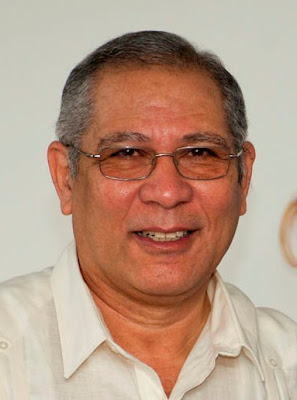
Video de César Reynel Aguilera, autor del relevante libro El Soviet Caribeno, sobre su nuevo libro Cuba Soviética.
*************
Tomado de http://www.lacapital.com.ar/
Un ex espía cubano señala a Fidel Castro como mandante del crimen de Dallas
*************
El mito John Fitzgerald Kennedy. Asegura que el día del magnicidio le ordenaron escuchar las comunicaciones de Texas. Oswald y su pedido de visa para Cuba.
El mito John Fitzgerald Kennedy. Asegura que el día del magnicidio le ordenaron escuchar las comunicaciones de Texas. Oswald y su pedido de visa para Cuba.
*************
Cuando el 22 de noviembre de 1963 el presidente de Estados Unidos, John F. Kennedy, murió asesinado por un francotirador en Dallas, Texas, muchas miradas acusadoras se dirigieron de inmediato hacia Cuba y Fidel Castro. ¿Por qué no? Al fin y al cabo, desde la frustrada invasión de Bahía Cochinos a la Crisis de los Misiles, Cuba había marcado la política exterior de la corta presidencia de Kennedy.
Acabar con el régimen castrista se llegó a convertir en una obsesión de muchos miembros de su gobierno, incluido su hermano y fiscal general Robert Kennedy. De hecho, hasta poco antes del magnicidio, Washington dio el visto bueno a numerosos planes de sabotaje en Cuba de la CIA y hasta para acabar con su líder. A ello se unía la fascinación por el mundo comunista, en general, y con Cuba y Fidel, en particular, del asesino de Kennedy, Lee Harvey Oswald, quien como se supo después, había intentado obtener en México un visado para viajar a Cuba apenas dos meses antes del magnicidio.
El rápido asesinato del propio Oswald selló por siempre la única voz que podría haber aclarado qué le llevó a perpetrar el asesinato. Pero abrió a la par un torrente de teorías conspirativas en las que la mano de Castro siempre tuvo, pese a las muchas fehacientes negaciones del acusado, un fuerte peso que perdura incluso cuando se cumplen ahora 50 años del magnicidio más analizado de la historia reciente.
Una figura clave. En la mañana del 22 de noviembre de 1963, Florentino Aspillaga todavía no se había convertido en el formidable espía cubano que, 24 años más tarde, acabaría desertando y convirtiéndose en una de las mayores fuentes sobre la inteligencia cubana de la CIA. En aquellos momentos sólo era un joven miembro recién reclutado por la Dirección General de Inteligencia (DGI) cubana, encargado de seguir todas las comunicaciones de la CIA. Pero esa mañana, según contaría años más tarde al analista de la CIA y estudioso de Cuba y los Castro Brian Latell, una llamada lo cambió todo. La orden: dejar de inmediato el seguimiento a la CIA y ponerse a escuchar cualquier comunicación procedente de Texas "Me dijeron que escuchara todas las conversaciones y que llamara a la jefatura si sucedía algo importante. Puse todos mis equipos a escuchar cualquier pequeño detalle de Texas. Me dijeron Texas", relató Aspillaga a Latell, una conversación que éste transcribió en su último libro, "Los secretos de Castro", en el que afirma que el líder cubano cuanto menos sabía de antemano del plan para asesinar a Kennedy.
 que afirma que el líder cubano cuanto menos sabía de antemano del plan para asesinar a Kennedy.
(Magnicidio. 22 de noviembre de 1963: Kennedy ya fue alcanzado y su limusina escapa de la zona hacia el hospital.)
"Castro lo sabía". Faltaban aún tres horas para el asesinato del presidente estadounidense cuando Aspillaga dice que recibió la orden. "Castro lo sabía. Sabían que Kennedy iba a ser asesinado", sostuvo. Según Latell, a esto se une el hecho de que Oswald, al ver denegada su visa a Cuba, provocó un escándalo en la embajada cubana en México e incluso llegó a amenazar con matar a Kennedy para demostrar su fidelidad a Cuba. Fidel Castro negó públicamente haber sabido de Oswald previo al asesinato de Kennedy, pero Latell acusa al líder cubano de mentir. Hasta hoy Castro ha negado cualquier responsabilidad en la muerte de Kennedy. "Su muerte me dolió. Era un adversario, claro, pero sentí su desaparición. Fue como si perdiera un oponente de mérito", dijo Castro al periodista Ignacio Ramonet en su libro "Cien Horas con Fidel".
"Temía a Kennedy". "No digo que Fidel Castro ordenara el asesinato, pero ¿quería Fidel ver a Kennedy muerto? Sí. Temía a Kennedy. Y sabía que Kennedy apuntaba contra él. En la mente de Fidel, probablemente estaba actuando en defensa propia", declaró Latell al diario Miami Herald al publicar su libro, el año pasado. Muestra de que el vínculo cubano nunca ha desaparecido de la mente de muchos son las últimas declaraciones del actual secretario de Estado, John Kerry, a la cadena NBC sobre sus "serias dudas" acerca de que Oswald actuara solo y sobre sus vínculos con Moscú y La Habana. "Tengo serias dudas de si (los investigadores) llegaron hasta el fondo del tiempo e influencia de Cuba y Rusia" sobre Oswald, declaró crípticamente Kerry, si bien se negó a especular más allá.
La tesis opuesta. Otros le dan al vínculo cubano incluso una vuelta de tuerca más. Y es que, según ha trascendido en la última década de la publicación de documentos clasificados, en sus últimos meses de vida, Kennedy estaba decidido a intentar un acercamiento a Castro, en vista de la dificultad de acabar con él. Algo que no gustó ni a los exiliados cubanos ni a todos los que seguían empeñados en derrocar a Castro, recuerda el escritor Jefferson Morley, estudioso del asesinato de Kennedy y colaborador de la web sobre este tema www.jfkfacts.org. "El asesinato de Kennedy demostró ser aleccionador. En los 50 años que siguieron tras 1963, la visión de Kennedy de normalizar las relaciones entre los dos países volverían a ser, literalmente, abatida cada vez que resurgía", recordó.
*************

Salvador Díaz Versón
El periodista Salvador Díaz Versón quién había ocupado un alto cargo policial en uno de los gobiernos auténticos tenía en su poder los expedientes de la Liga Anticomunista donde estaban depositados muchos años de investigación sobre los comunistas en Cuba y fuera de Cuba. El expediente A-943 correspondía a Fidel Castro Ruz y en él se reflejaba que Fidel Castro había comenzado a trabajar para la Unión Soviética en 1943 y que en su reclutamiento y entrenamiento había desempeñado un importante papel un diplomático supuestamente llamado Gomer Bashirov, En el expediente también habían fotos y documentos que que evidenciaban su conexión con Moscú. Después del triunfo de la Revolución y concretamente tan cercano como el 23 de enero de 1959 se requisaron los archivos que estaban, si mal no recuerdo haber leido, en la casa de Salvador Díaz Versón en Cojimar. En ese expediente había una carta de Fidel Castro dirigida a Abelardo Adán en Praga que fue interceptada por Salvador Díaz Versón decía: ¨ Nuestro amigo me dijo que me mantiene reservado para mayores esfuerzos y que no debo quemarme viajando ahora. Ellos tienen un plan en el cual yo seré el eje que se implementara muypronto. Es posible que entonces volvamos a vernos sin temor al imperialismo yanqui¨. La información de casi todo lo que está en este párrafo están en las páginas 777 y 778 del excelente libro (aunque no coincido en algunas interpretaciones que aparecen en él) titulado La Verdadera República de Cuba , del Dr.Andrés Cao Mendiguren.
************
Salvador Diaz Verson
1959 Biographical Sketch
Metro Dade County Police File
OCB file 49315-B
Biographical sketch on
SALVADOR DIAZ-VERSON
Cuban Journalist and Author
He was born in Havana, Cuba, in 1905. He went to work as a cub reporter and rose rapidly to star police reporter. He developed in Cuba sensationalism in crime reporting and the police editorial. His newspaper work gave him a first hand knowledge of the atrocities of Dictator Gerardo Machado and the censorship on all publications provoked a conflict between Diaz Verson and the government. He had to leave Cuba and found political asylum in Madrid, Spain, in 1933.
Returning to Cuba on the eve of the triumph of the revolution, he took an active part in the reorganization of the government. He became Chief of the National Police while Fulgencio Batista took over as Chief of the Army. He was able to see the local Communists in action and brought an end to mob rule with the fire hose.
An early break with Batista caused his resignation and return to journalism. In 1948 he was Chief of the Army Counter-Spy Bureau and his job was to uncover and bring to trial the Communists in the island. He was the officer who provoked the rupture of diplomatic relations between Cuba and the Soviet Union and who occupied and searched the Russian Embassy finding evidence of the Russian abuse of diplomatic immunity.
Batista's coup d'etat in 1952 brought an end to his job in the Army and his activities as a revolutionary plotting against Batista brought to him once more imprisonment and exile. He lived in Miami, Florida, from June of 1954 until June of 1955. He was allowed to re-enter Cuba under a general amnisty [amnesty] and he reassumed his job as an editor in the daily "Excelsior". While he thereafter continued to support the Revolution, censorship was so tight, that he did not come up again in open conflict with the regime.
He travelled [traveled] through Latin America reporting for Excelsior and became the president of O.I.P.A.C. (Interamerican Organization of Anti-Communist Journalists), with headquarters in Lima, Peru. He is the Cuban delegate in the Inter-American Confederation for the defense of the Continent, with headquarters in Mexico. He is a member of the Association of Studies on Communism, and Press Secretary of the First Anti-Communist World Congress which will take place in Turkey.
He has published: "Clau", a novel; "Andrea Barrios' Death", "The Great Problem of the Penal Institutions", "The Ones who Came Back to Life"; Nazism in Cuba", "Communism and Fear", "A Crisis in American Culture", also, "America, a Suicidal Continent", and "Red Tsarism, Russia Avancing [Advancing] Toward America". He is now preparing "Biography of a Combat Veteran" and "Life Through a Newspaper Column".
He recently fled to Miami, on the 20th of March of this year, this time from the communistic terrorism against which he had fought most of his life. The legitimatization of the Communist Party together with high revolutionary offices held by reds of various hues, made him and his anticommunist associates a cancer on the new society that had to be ended. Two of his associates are now in La Cabana Fortress awaiting the opportunity to swell the execution statistics. His own predicament and escape is a story in itself.
End of Page
Copyright 1998-2014 Cuban Information Archives. All Rights Reserved.
*************
Communist Threat to the United States Through the Caribbean
U.S. Senate Subcommittee to Investigate the Administration of the Internal Security Act and Other Internal Security Laws, of the Committee on the Judiciary.
Tuesday, May 6, 1960
Testimony of Salvador Díaz-Versón
(Through an interpreter)
Senator DODD. Will you take the chair and give your name and address?
Mr. SOURWINE. What is your full name?
Mr. DIAZ-VERSON. Salvador Diaz-Verson y Rodriguez.
Mr. SOURWINE. What is your business or profession?
Mr. DIAZ-VERSON. Newspaperman and writer.
Mr. SOURWINE. Were you ever in the army?
Mr. DIAZ-VERSON. I was Chief of Military Intelligence from the year of 1948 until March 10, 1952.
Mr. SOURWINE. Were you ever Chief of Criminal Investigations and the investigation of communism in Cuba?
Mr. DIAZ-VERSON. Yes, sir; in the year of 1933 for the first time, and in 1948 until 1952 in an official capacity, although since the year of 1928 I have dedicated myself to study to investigate Communist activities in America.
Senator KEATING. Since what year?
Mr. DIAZ-VERSON. 1928 on.
Mr. SOURWINE. Were you a supporter of Batista?
Mr. DIAZ-VERSON. Since the 10th of March of 1952 when Batista had the coup d'etat, I lived for 2 years in Miami as an exile.
Mr. SOURWINE. During Batista's regime?
Mr. DIAZ-VERSON. Yes, Sir.
Mr. SOURWINE. Were, you ever a supporter of the Castro movement?
Mr. DIAZ-VERSON. Never. I was a member of the Carlos Prio movement, and I also refused to participate in any meeting with Fidel Castro.
Mr. SOURWINE. Is it true that the Castro regime destroyed files on Cuban Communists?
Senator KEATING. Just one minute before you answer that.
You have never been at any time a supported of Batista, is that correct?
Mr. DIAZ-VERSON. Yes, sir.
In 1933, when Batista took the power, a group of revolutionaries that had join, we joined the 4th of September movement, of which movement Batista was a member. But that reunion did not last but 5 months and 22 days. We immediately opposed him.
Senator Keating. And what was in that year?
Mr. DIAZ-VERSON. 1934.
Senator KEATING. And you have ever since 1934 opposed Batista; is that correct?
Mr. DIAZ-VERSON. When Batista first established his first connection with the Communists in 1934, I opposed him.
Senator KEATING. Have you always since that time opposed him?
Mr. DIAZ-VERSON. Yes, sir, affirmatively.
Senator KEATING. And you think- that any efforts of his to return to Cuba would not be in the interest of the Cuban people; is that correct?
Mr. DIAZ-VERSON. You make reference to the present time?
Senator KEATING. Yes.
Mr. DIAZ-VERSON. Negatively. The Cuban people would never support the Batista regime again.
Senator KEATING. And you personally would never support it again?
Mr. DIAZ-VERSON. No, Sir.
Senator KEATING. I want to make a comment.
I think that we should make it very clear at the outset of testimony that we do not want, to call any witness who is a supporter of Batista or who feels that his return to Cuba would be of interest to the Cuban people.
One or two of the other witnesses have been rather equivocal in that matter. I think we should avoid calling witnesses in this proceeding that are not ready to testify under oath unequivocally that they are opposed to the, Batista regime.
We have plenty of evidence, I believe, without calling such witnesses -- I do not think that they add anything to the proceedings, because they could well be shown to have a bias. And I think the testimony of this witness has been made considerably more weighty by his unequivocal testimony that lie is opposed to the return of Batista in any shape or form.
Proceed.
Mr. SOURWINE. Is it true that the Castro forces destroyed files on Cuban Communists?
Mr. DIAZ-VERSON. Yes, sir.
Mr. SOURWINE. How many such files?
Mr. DIAZ-VERSON. I had privately an archive which comprised 250,000 cards of Latin American Communists and 943 personal records. This was the result of my trips all over Latin America visiting country by country, what were the conditions of communism, and what numbers of Communists there were in each plaice. That archive was stolen and destroyed by the Communists on January 26, 1959.
Senator KEATING. When you say stolen and destroyed by the Communists, can you be more specific?
Mr. DIAZ-VERSON. Do you want the name of the persons that, went there, the ones that did it?
Senator KEATING. Were you there at the time?
Mr. DIAZ-VERSON. No; I was not present at that moment. I had an employee who took care of the archives. A group of four men armed with machineguns arrived.
Senator KEATING. When was this?
Mr. DIAZ-VERSON. January 26, 1959. They gagged the employee, they destroyed the furniture, and they took what was inside the metal files. The neighbors, because, it was an apartment house, saw from the balconies that it was a truck of the 7th military regiment. They testified, and it was published in the newspapers of January 27 of 1959 in Havana.
Senator KEATING. Where were you then?
Mr. DIAZ-VERSON. I was working at that time in the newspaper Excelsior, where I was in charge of redaction, of writing.
Senator KEATING. When did you come to this country?
Mr. DIAZ-VERSON. The 19th of March of 1959.
Mr. SOURWINE. I show you a list of names which you gave the committee, and I ask if you can, of your of knowledge, state that each of the individuals here listed has been indicated in the official files as Communists?
Mr. DIAZ-VERSON. Yes, Sir; all of those names represent persons well known by me to be Communists with a long history, but I wish to request permission of the Senators to state that from this date that I gave this report to the present time, the situation in Cuba has changed extraordinarily, and that new situations have been created.
If you will permit me briefly, I will make an explanation.
We, the investigators of social problems of the Communists, have already established that Cuba is now a socialistic Soviet republic. And we haven't established that this capriciously, but because the Communists have a bible, which is a book entitled "Leninismo," written by Stalin, which is a consulting book to all the Communists in the world to establish socialist regimes. It appears here that there are two types of revolutions, a bourgeois revolution and a socialist revolution, and Stalin stated perfectly which one was one type and which is the other type.
In accordance with those studies, through investigations which are not mistaken, because they are laboratory studies, a professional group, as specialists in this study of communism, we have arrived at the total conclusion that in Cuba, there now exists a regime socialist Soviet. And I have written, compiled a booklet of sociology that I am mailing to all the universities in Latin America where, after I have explained the technical studies of the Communists, I explain in sketches how the Soviet regime operates now in Cuba. I can leave the Senators a copy. It is written in Spanish.
Mr. SOURWINE. Mr. Chairman, I ask that this be received, subject to the ruling that its printing be withheld subject to the committee's determination.
Senator DODD. Yes.
(Booklet referred to was placed in the subcommittee files for reference.)
Mr. SOURWINE. In regard to this list, at the time you gave it to the committee, it was secret and we accepted it with that classification.
Mr. DIAZ-VERSON. I can repeat it publicly -- I can repeat them now if you so desire, Senators.
Mr. SOURWINE. I don't think it is necessary for the witness to repeat them. I just want to know if the witness has any reason why the list should not be printed in the public press?
Mr. DIAZ-VERSON. I have not. I will be satisfied if it is published.
Mr. SOURWINE. I ask that this list go in the record, then.
Senator DODD. It may go in.
(The list referred to with the explanation made by the witness at the time, is as follows:)
MÁS EN :
************
Nota del Bloguista de Baracutey Cubano
En el libro¨One hell of a Gamble ( The Secret History of the Cuban Missile Crisis) de los investigadores Aleksander Fursenko Timothy Naftali, dos historiadores y exagentes de Inteligencia soviéticos con acceso a los expedientes de la KGB y GPU se dice que desde febrero de 1959, según los archivos abiertos de la KGB y la GPU soviéticas, comenzaron los acercamientos a la Unión Soviética iniciados no por Jorge Risquet, que es la versión oficial trasladándolos a fecha posterior, sino por Emilio Aragonés en México. Para el que no tenga ese libro, puede leer el artículo ¨La crisis de octubre y la verdadera historia del año 1959 a la luz de los archivos secretos de la URSS y de los Estados Unidos ¨ de Miguel Ángel Sánchez en la Revista Encuentro número 10 de otoño 1998, donde se analiza en detalles la más relevante información que da el mencionado libro. Para leer ese artículo haga clik AQUÍ
Una persona que ha accedido a los archivos soviéticos me ha planteado que entre los casi agentes de la KGB en Cuba antes de 1959 se encontraba Emilio Aragonés.
Emilio Aragonés por sus borracheras, o para vigilar al Che, fue enviado a la guerrilla del Che en el Congo al igual que Aldo Pedro Margolles
En LA Division Work File
La División de la CIA para Latinoamérica creó la fuerza de tarea ¨JFK Task Force¨ que durante el tiempo que funcionó la Comisión Church y HSCA fue la fuente de los reportes o comunicados de la CIA donde se informaba la posible complicidad de la tiranía cubana con el magnicidio de John F. Kennedy; algunos reportes tienen su origen en México antes del magnicidio. Muchos de sus informes pueden leerse en:
http://www.maryferrell.org/mffweb/archive
Algunos de ellos son :
NARA Record Number: 104-10308-10146 ALDO PEDRO MARGOLLES Y DUENAS AND EMILIO ARAGONES Y NAVARRO PLOT TO ASSASSINATE THE PRESIDENT OF THE UNITED STATES
Página 1
Página 2
NARA Record Number: 104-10308-10142 CABLE RE ASSASSINATION PLOT OF ALDO PEDRO MARGOLLES Y DUENAS AND EMILIO ARAGONES Y. NAVARRO
Página 1
Página 2
ALDO PEDRO MARGALLES Y DUENAS - SERO LOKOUT
Página 1
Página 2
Página 3
La síntesis de lo que se dijo en la Convención de Bahamas donde participó el Gral de División Fabián Escalante Font puede leerse en idioma inglés en
JFK & The Cuban Connection
Havana's Spies Spill the Beans at Top-Level Conference!
by Dick Russell
High Times - March 1996
o también en
U.S. - Cuban intelligence conference on JFK assassination
Este artículo de Eduardo Prida es sobre lo que NO DIJO Fabián Escalante en esa reunión.
Etiquetas: asesinato, César Reynel Aguilera, cuba, Cuba Soviética, Dallas, EE.UU., informe, JFK, libro, magnicidio, NARA
posted by PPAC @ 1/14/2026 07:02:00 a. m.
0 comments




0 Comments:
Publicar un comentario
<< Home